
Nonprofit Data Privacy: Key Components & Free Assessment


How protected is your sensitive client data?
Many nonprofits collect and store sensitive client information – health records, financial information, or legal documents. All of this information is confidential and entrusted information that could become the target of a malicious attack. As a nonprofit, it is your duty to protect the data of the communities you serve.
In this guide, you’ll learn all you need to know about nonprofit data privacy, including:
- Nonprofit Data Privacy FAQ
- Nonprofit Data Privacy Components & Assessments
- After Your Nonprofit Data Privacy Assessment
- Additional Resources on Nonprofit Data Privacy
Along the way, we’ll walk you through a comprehensive assessment of your nonprofit’s data privacy approach so you can identify your strengths and areas for improvement. Let’s get started:
Nonprofit Data Privacy FAQ
What Is Nonprofit Data Privacy?
Nonprofit data privacy is the set of policies and controls that govern how a nonprofit collects, uses, shares, stores, and disposes of personal information about donors, clients, volunteers, staff, and other constituents. At its core, it means using people’s data only in ways they understand and have agreed to, and giving them appropriate control over their information.
Strong data privacy is equally important for compliance and trust-building: it helps your organization meet legal and regulatory obligations and avoid costly penalties, while showing supporters and the communities you serve that their information is respected and protected.
What Is The Difference Between Data Privacy and Cybersecurity?
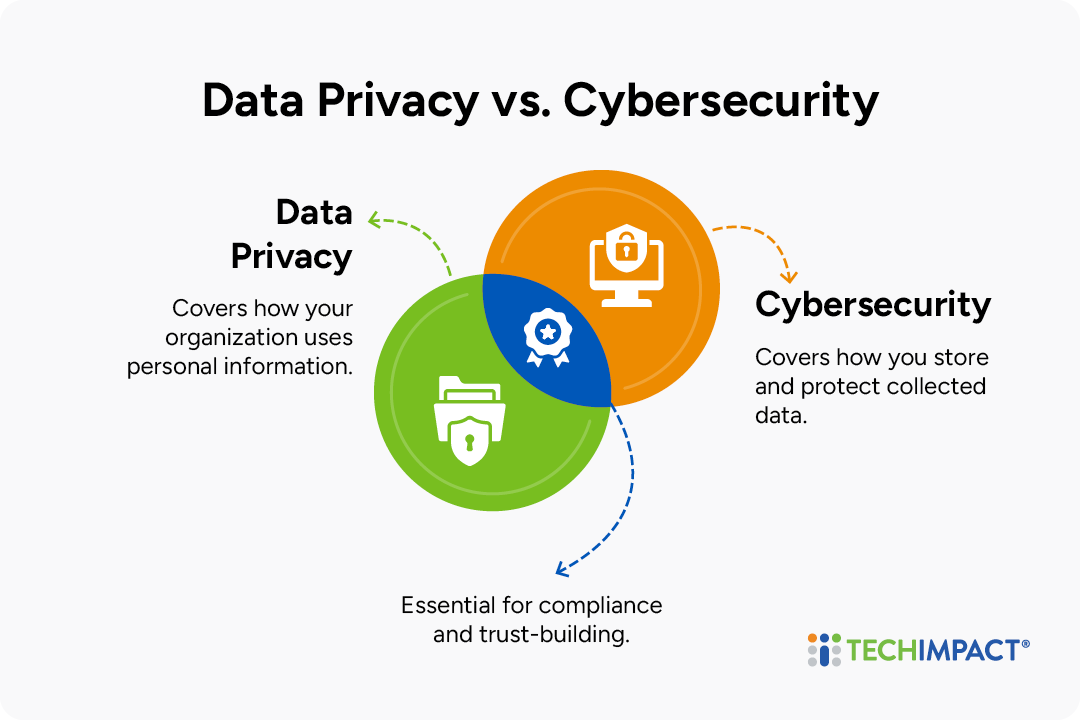
Data privacy and cybersecurity are closely related, but they answer different questions. Data privacy is about how personal information is used, like what your nonprofit collects, why, who it’s shared with, and whether those uses match what individuals have agreed to. Cybersecurity is about how that information is stored and protected—the tools, settings, and practices that defend your systems and data against unauthorized access, breaches, and attacks.
Where the two overlap is where your nonprofit needs both to succeed: strong security protects the data you’ve promised to keep private, while clear privacy practices limit how much sensitive data you collect and keep in the first place. Together, they help your organization stay compliant and show supporters and the communities you serve that their information is in good hands.
What Data Privacy Regulations Do Nonprofits Need To Follow?
The data privacy regulations your nonprofit needs to follow depend on where you operate, where your constituents live, and the type of work you do. A health clinic, a school, and an international relief organization will each face different requirements.
That said, these are some of the most common regulations nonprofits should know:
- IRS Reporting Requirements: Many tax-exempt organizations must report information about major donors to the IRS on Form 990, Schedule B. You must keep donor names and addresses confidential when sharing your return for public inspection.
- CCPA/State Privacy Laws: A growing number of state privacy laws, along with the California Consumer Privacy Act, give individuals rights to access, correct, and delete their data.
- GDPR: The European Union’s General Data Protection Regulation applies if your nonprofit collects or processes personal data of people in the EU. It requires a lawful basis for using data, clear consent practices, and prompt breach reporting.
- FERPA: The Family Educational Rights and Privacy Act protects student education records at schools that receive federal education funding. Nonprofits that run schools or receive student records through school partnerships must follow its disclosure rules.
- HIPAA: The Health Insurance Portability and Accountability Act protects health information held by covered healthcare providers, health plans, and their business associates. Health and human services nonprofits often fall under its privacy and security requirements.
- PCI DSS: This is an industry standard rather than a law. The Payment Card Industry Data Security Standard applies to any nonprofit that accepts credit or debit card donations and sets requirements for handling cardholder data securely.
Because privacy laws keep changing and new state laws arrive every year, it’s important to stay on top of these requirements. Work with knowledgeable legal and technology professionals who can help your nonprofit understand which rules apply and put the right practices in place.
Nonprofit Data Privacy Components & Assessment
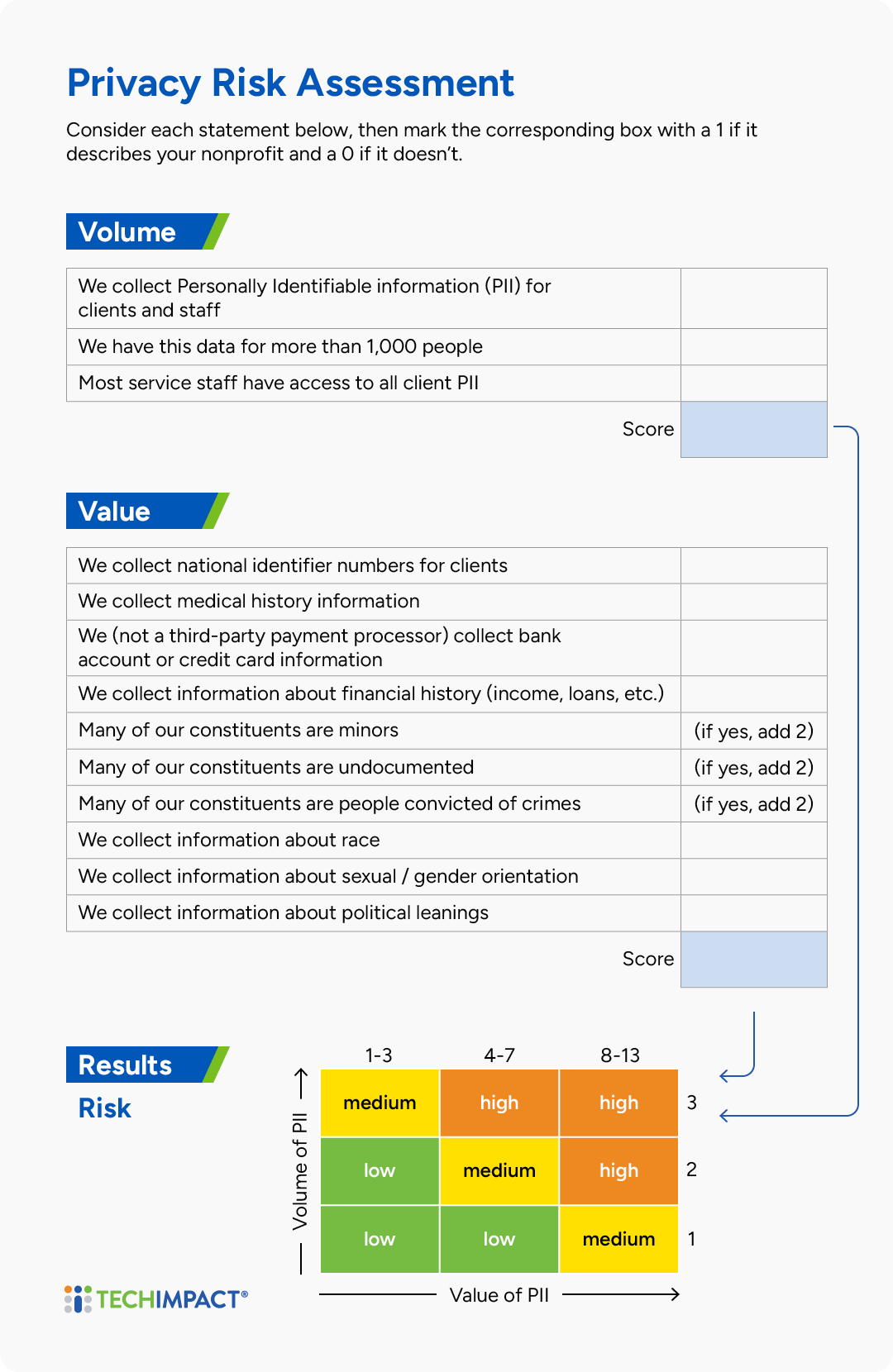
A data privacy assessment is a practical starting point for understanding where your nonprofit stands. It’s designed to help you determine the approximate level of risk your organization faces based on the volumes and types of sensitive information you collect, as well as the safeguards you have in place to protect that information from unauthorized access.
The assessment looks at three core components of data privacy: privacy risk, policy development, and technology setup. Below, we explain what each one means and why it matters, so you can identify gaps, prioritize improvements, and build a privacy program that protects your constituents and strengthens their trust.
Privacy Risk
Privacy risk is the potential for harm to individuals, and to your organization, if the personal information you hold is misused, exposed, or accessed without permission. Your level of risk depends largely on how much sensitive data you collect and how sensitive it is.
For example, a nonprofit that stores only names and emails for a newsletter faces far less risk than one that handles health records, Social Security numbers, payment details, or information about children. Understanding your privacy risk helps you focus resources where they matter most, protecting the people who trust you and avoiding the financial, legal, and reputational fallout of a breach.
Policy Development
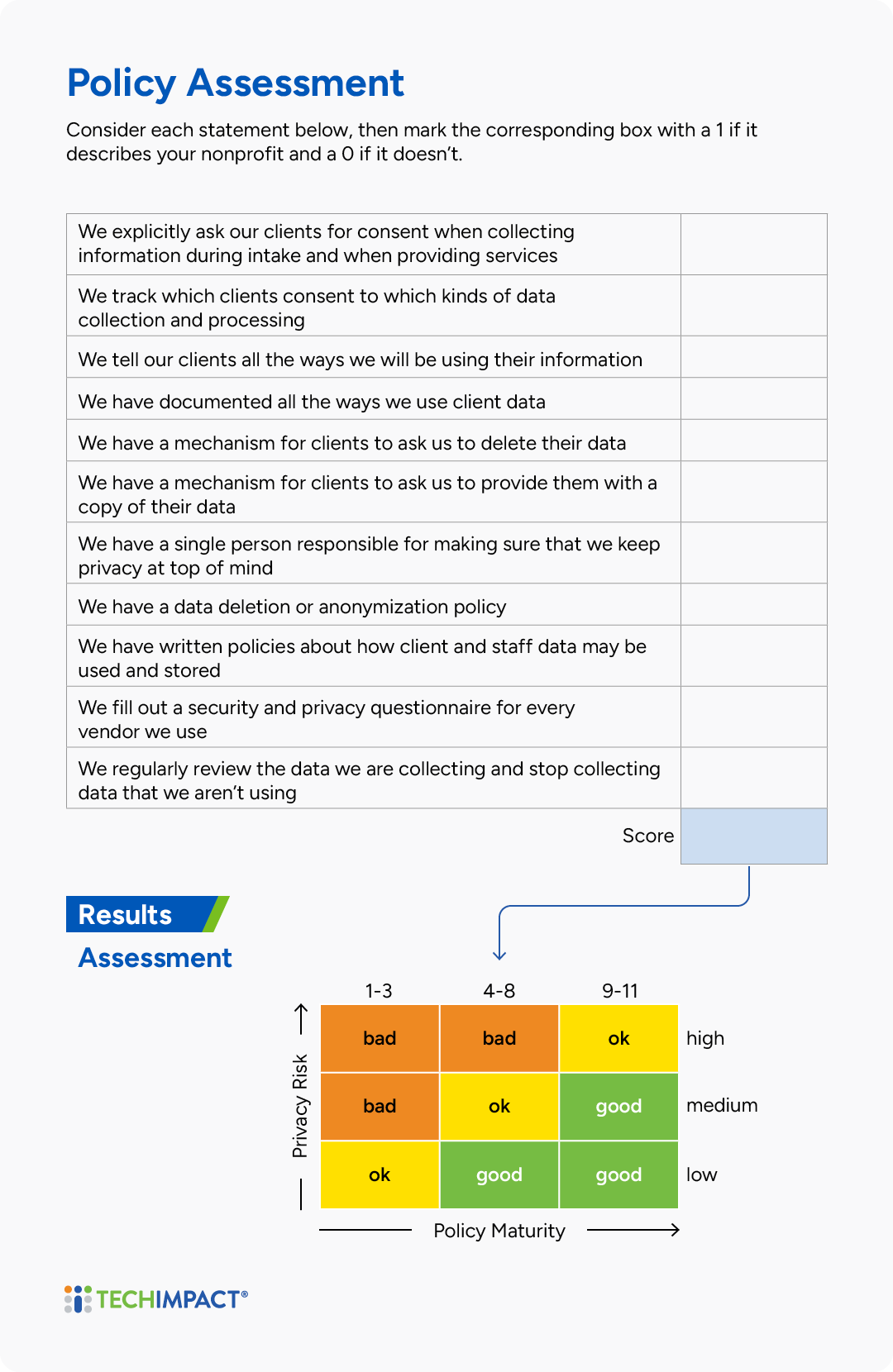
Policy development is about putting clear, written guidelines in place for how your nonprofit handles personal information, and making sure those guidelines are followed. Strong privacy policies start with transparency and consent: telling individuals how their data will be used, tracking what they’ve agreed to, and giving them a way to request a copy of their data or have it deleted. They also define accountability and limits, such as naming a person responsible for privacy, documenting how client and staff data may be used and stored, setting rules for deleting or anonymizing data, vetting vendors, and regularly reviewing what you collect so you stop gathering data you don’t need. Well-defined policies turn good intentions into consistent practice, helping your organization stay compliant and earn lasting trust.
Technology Setup
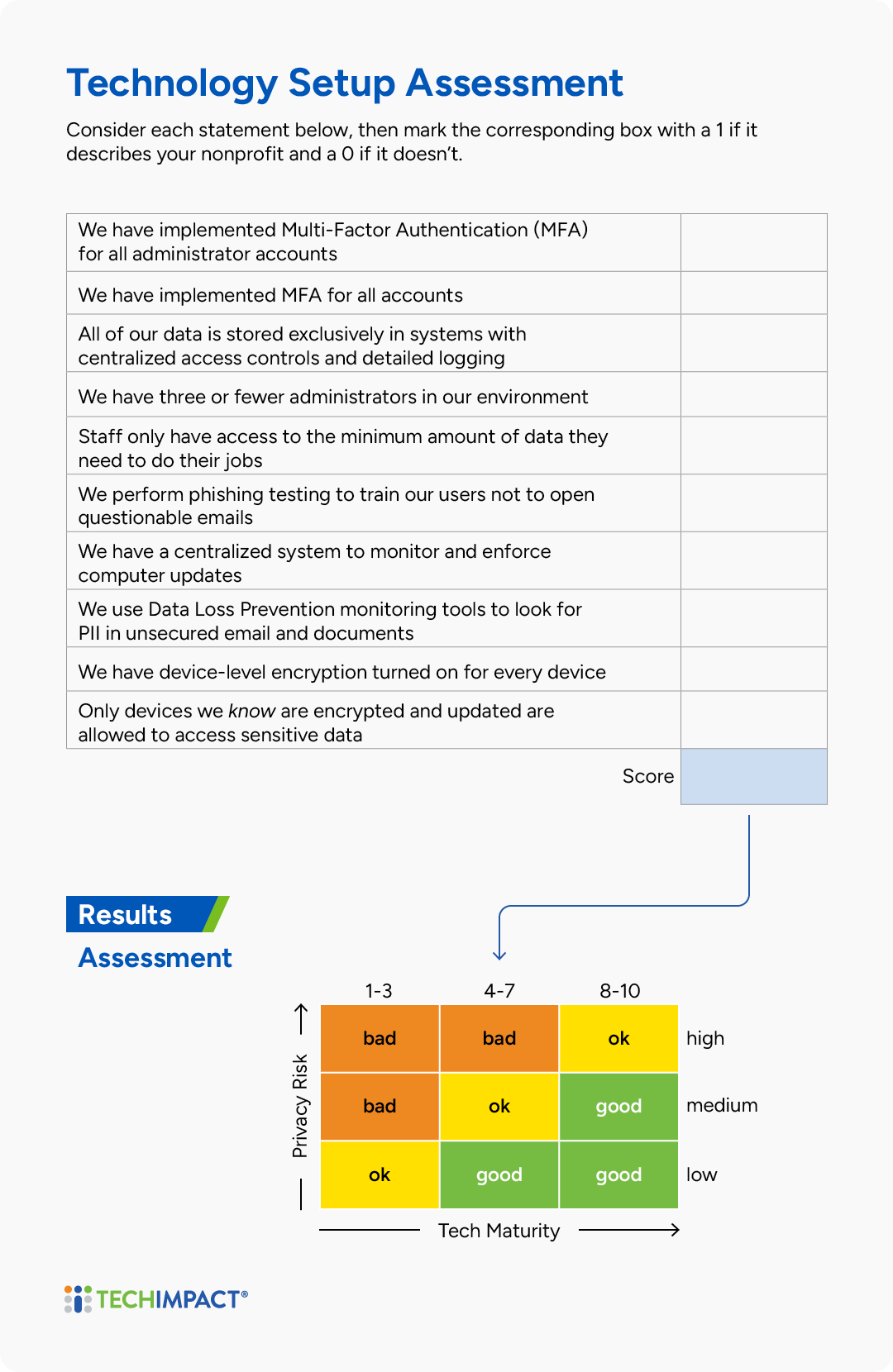
Technology setup refers to the tools and configurations that protect your data from unauthorized access, turning your privacy commitments into real safeguards. Key practices include controlling who can get in, such as requiring multi-factor authentication (MFA) for all accounts, limiting the number of administrators, and giving staff access to only the data they need to do their jobs.
They also include protecting the data and devices themselves, such as storing information in systems with centralized access controls and logging, enforcing computer updates, turning on device encryption, using data loss prevention tools to flag exposed personal information, and allowing only secure, up-to-date devices to access sensitive data. Combined with regular phishing training for staff, the right technology setup significantly reduces your risk of a breach and helps you keep the promises you make to the people you serve.
After Your Nonprofit Data Privacy Assessment
After completing the data privacy assessment above, ask yourself the following questions to begin developing your improvement plan:
- What will you do to shift your organization's culture around privacy?
- What policies and technologies will you consider implementing?
- What are you worried about now that you weren't worried about before? What is no longer such a concern?
Data privacy isn’t a one-time project. Regulations keep changing, cyber threats keep evolving, and the tools nonprofits rely on are updated all the time. That’s why it pays to work with technology consultants who have their finger on the pulse, tracking new state privacy laws, emerging security risks, and best practices as they take shape.
Tech Impact can help you assess where you stand today, close the gaps in your policies and technology setup, and adjust your approach as requirements shift, so your team can stay focused on the mission.
Wrapping Up: Additional Resources on Nonprofit Data Privacy
By pairing your commitment to the people you serve with expert, up-to-date guidance, you can protect sensitive information, stay compliant, and build the lasting trust that keeps supporters and communities coming back.
For more information on nonprofit data management, check out these resources:
- Creating a Culture That Values Security
- Microsoft Intune For Nonprofits
- Nonprofit's Guide To Data Migration
All-Access Pass
Technology keeps advancing, which means we all have to keep learning and building our skills. Get more learning with less cost by getting the All-Access Pass, which grants you unlimited access to the Technology Learning Center.